How to Order Custom Sports Hoodies in Bulk?
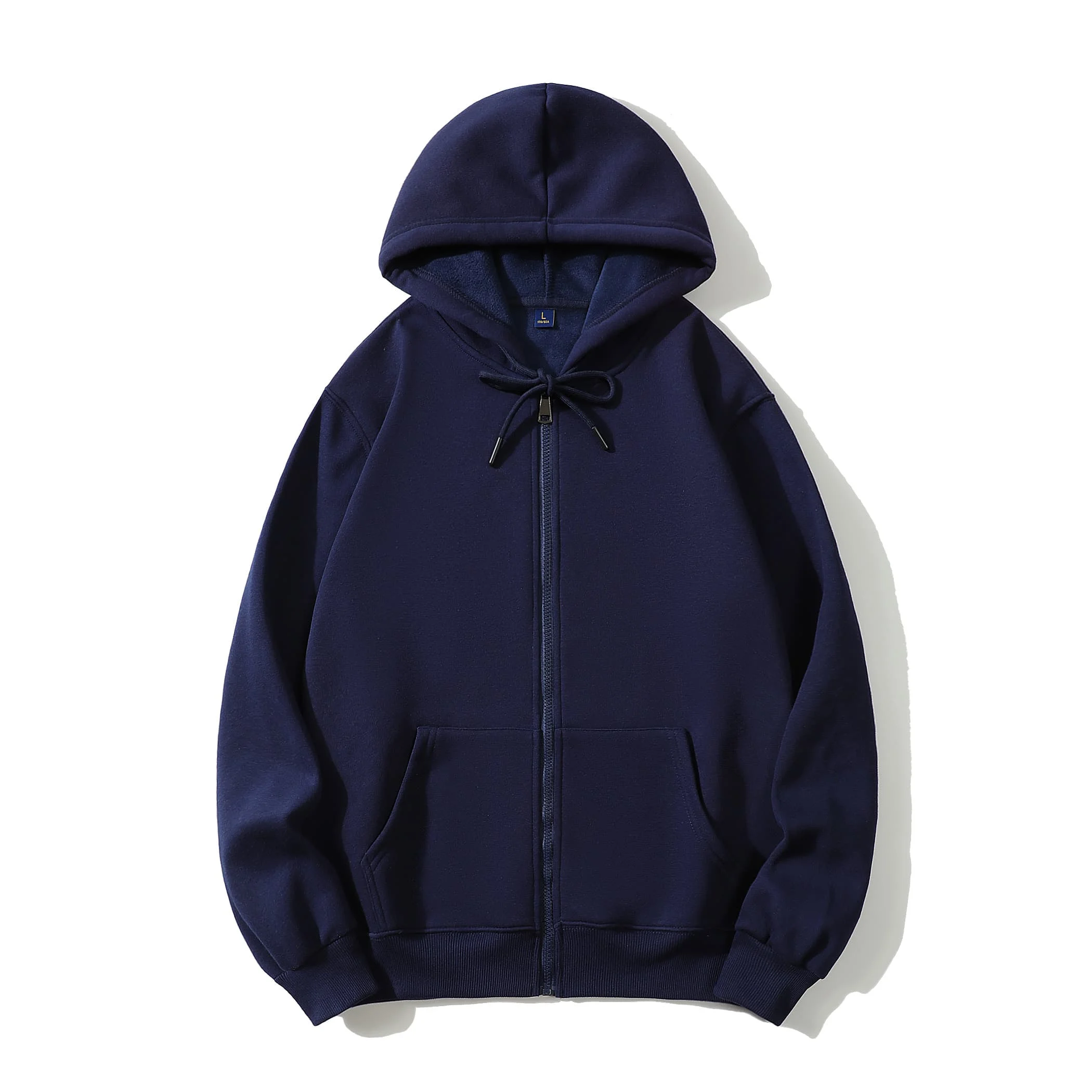
Bulk orders for custom sports hoodies require precise planning of the purchase scale and budget. According to Sporting Goods Manufacturers Association, team orders typically have a minimum order quantity of 100 pieces (MOQ), and the average cost per piece decreases with quantity: for orders of 500 pieces, it can be reduced to 18 pieces (including basic printing), and for orders over 2,000 pieces, it can be compressed to 12 pieces. For instance, Nike's 5,000-piece order for the college league in 2023 managed to keep the cost of polyester fiber blended fabric within 42% of the total budget through large-scale procurement. The core control points include the fabric weight (it is recommended to be 300-400 GSM to balance warmth retention and breathability), dimensional tolerance (industry standard ±1.5cm), and supply chain timeliness (the supply chain cycle in China is about 30 days, which is 40% faster than that in Europe and America).
Supplier screening needs to verify compliance certification and production accuracy. The Top 10 sportswear manufacturers all need to pass the Oeko-Tex Standard 100 environmental protection certification and WRAP social responsibility audit, and the AQL (Acceptable Quality Level) quality inspection standard needs to reach Level Ⅱ. Referring to the order case of Adidas' 2022 World Cup merchandise, it adopted a digital proofing system to shorten the design confirmation cycle from 14 days to 72 hours, and the printing positioning error was ≤0.3mm. The purchaser shall require the supplier to provide a color fastness report of Delt-E ≤2 (ensuring that the fading rate is less than 5% after 50 washes) and a parameter certificate of tear resistance strength ≥50N.
The production process needs to optimize the technology to control the loss rate. Direct jet digital printing (DTG) is suitable for small batches of complex patterns of less than 50 pieces, with a cost of approximately 8 per piece. Screen printing is more suitable for orders over 500, and the printing cost for 12 colors or less can be reduced to 3 per piece. In 2023, the Premier League's Wolverhampton Wolves commemorative shirt order adopted heat transfer printing technology, achieving a delivery of 2,000 pieces within 72 hours with a defect rate of only 0.8%. The key nodes include the utilization rate of fabric cutting (which can be increased to 92% by the AI layout system), the density of stitches (10-12 stitches per inch as the standard), and the rework rate of defective products (the industry average is 3%, and leading factories can reduce it to 1%).
 Quality control should be implemented through phased sampling and testing. According to the ANSI/ASQ Z1.4 standard, for an order of 5,000 pieces, 200 pieces need to be randomly selected for three-stage testing: the verification of size and specification compliance rate of pre-production samples is ≥98%, the mid-term inspection of print adhesion strength (≥ level 4 ISO rating), and the final inspection is based on AQL1.5 for defect determination. In 2021, Under Armour's NCAA order suffered a direct loss of $28,000 due to the failure to implement humidity control (which should maintain 55%RH±5%), resulting in static adsorption problems of 3% of the goods.
Logistics and inventory strategies directly affect turnover efficiency. 80% of customers choose the FOB terms. Ocean freight accounts for approximately 12% of the value of the goods (based on 12,000 pieces in a 40-foot container), while air freight costs will increase by 300%. Enterprises that adopt the VMI (Vendor Managed Inventory) model, such as Decathlon, have reduced their warehouse turnover rate from 60 days to 35 days. It is recommended to set aside 10% safety stock to deal with risks such as event postponements, referring to the case of the 2022 Qatar World Cup where 20% of orders were delayed due to climate policies.
After-sales tracking optimizes the repurchase rate. The smart custom sports hoodies implanted with NFC chips can collect users' wearing frequency data (an average of 2.3 times per week), and analyze the repurchase cycle in combination with the CRM system (an average of 18 months for team customers). Nike's membership program shows that companies providing exclusive design tools can increase B-end customer loyalty by 35% and expand the average scale of secondary orders by 70%.
Quality control should be implemented through phased sampling and testing. According to the ANSI/ASQ Z1.4 standard, for an order of 5,000 pieces, 200 pieces need to be randomly selected for three-stage testing: the verification of size and specification compliance rate of pre-production samples is ≥98%, the mid-term inspection of print adhesion strength (≥ level 4 ISO rating), and the final inspection is based on AQL1.5 for defect determination. In 2021, Under Armour's NCAA order suffered a direct loss of $28,000 due to the failure to implement humidity control (which should maintain 55%RH±5%), resulting in static adsorption problems of 3% of the goods.
Logistics and inventory strategies directly affect turnover efficiency. 80% of customers choose the FOB terms. Ocean freight accounts for approximately 12% of the value of the goods (based on 12,000 pieces in a 40-foot container), while air freight costs will increase by 300%. Enterprises that adopt the VMI (Vendor Managed Inventory) model, such as Decathlon, have reduced their warehouse turnover rate from 60 days to 35 days. It is recommended to set aside 10% safety stock to deal with risks such as event postponements, referring to the case of the 2022 Qatar World Cup where 20% of orders were delayed due to climate policies.
After-sales tracking optimizes the repurchase rate. The smart custom sports hoodies implanted with NFC chips can collect users' wearing frequency data (an average of 2.3 times per week), and analyze the repurchase cycle in combination with the CRM system (an average of 18 months for team customers). Nike's membership program shows that companies providing exclusive design tools can increase B-end customer loyalty by 35% and expand the average scale of secondary orders by 70%.
Quality control should be implemented through phased sampling and testing. According to the ANSI/ASQ Z1.4 standard, for an order of 5,000 pieces, 200 pieces need to be randomly selected for three-stage testing: the verification of size and specification compliance rate of pre-production samples is ≥98%, the mid-term inspection of print adhesion strength (≥ level 4 ISO rating), and the final inspection is based on AQL1.5 for defect determination. In 2021, Under Armour's NCAA order suffered a direct loss of $28,000 due to the failure to implement humidity control (which should maintain 55%RH±5%), resulting in static adsorption problems of 3% of the goods.
Logistics and inventory strategies directly affect turnover efficiency. 80% of customers choose the FOB terms. Ocean freight accounts for approximately 12% of the value of the goods (based on 12,000 pieces in a 40-foot container), while air freight costs will increase by 300%. Enterprises that adopt the VMI (Vendor Managed Inventory) model, such as Decathlon, have reduced their warehouse turnover rate from 60 days to 35 days. It is recommended to set aside 10% safety stock to deal with risks such as event postponements, referring to the case of the 2022 Qatar World Cup where 20% of orders were delayed due to climate policies.
After-sales tracking optimizes the repurchase rate. The smart custom sports hoodies implanted with NFC chips can collect users' wearing frequency data (an average of 2.3 times per week), and analyze the repurchase cycle in combination with the CRM system (an average of 18 months for team customers). Nike's membership program shows that companies providing exclusive design tools can increase B-end customer loyalty by 35% and expand the average scale of secondary orders by 70%.